
Buying a home in Marbella is usually more straightforward for foreign buyers than they expect.
Once you have a Spanish NIE number and a Spanish bank account, the process is very similar to that for local buyers. The main difference is that foreign buyers usually need to provide more documentation, undergo more thorough identity checks and provide proof of funds, and sometimes obtain mortgage approval.
Marbella continues to attract buyers from the UK, Germany, Scandinavia, the Netherlands, the United States and the Middle East, among many other countries. Some buyers visit several times before choosing a home. Others visit once, sign at the notary, or complete the process remotely with a lawyer and power of attorney.
The key is simple: prepare properly before you reserve.
Can Foreigners Buy Property in Marbella?
Yes. Foreigners can buy property in Marbella, whether they are EU citizens or non-EU citizens.
Marbella is located in the province of Málaga, in Andalucía, Spain. This means buyers follow Spanish national property law, Andalusian tax rules and local planning regulations from Marbella Town Hall.
For most buyers, the essential starting points are:
- Valid passport
- NIE number
- Spanish bank account
- Proof of funds
- KYC documentation
- Lawyer
- Mortgage pre-approval, if financing is needed
Step 1: Define Your Budget Before Viewing
Before viewing homes, you should understand your real purchase budget.
Your budget should include:
- Purchase price
- Taxes
- Legal fees
- Notary fees
- Land Registry fees
- Mortgage costs, if applicable
- Possible renovation or furnishing costs
A buyer with €800,000 available should not search only for €800,000 properties. The full acquisition cost must be considered from the beginning.
Step 2: Get Mortgage Pre-Approval if Needed
If you need financing, speak with a mortgage broker or bank before making offers.
Foreign buyers are often asked for:
- Passport
- NIE, if already available
- Tax returns
- Payslips or company accounts
- Bank statements
- Credit report
- Proof of income
- Proof of existing assets and liabilities
Non-resident mortgages are possible, but the approval process takes time. Having pre-approval gives you a stronger position when negotiating.
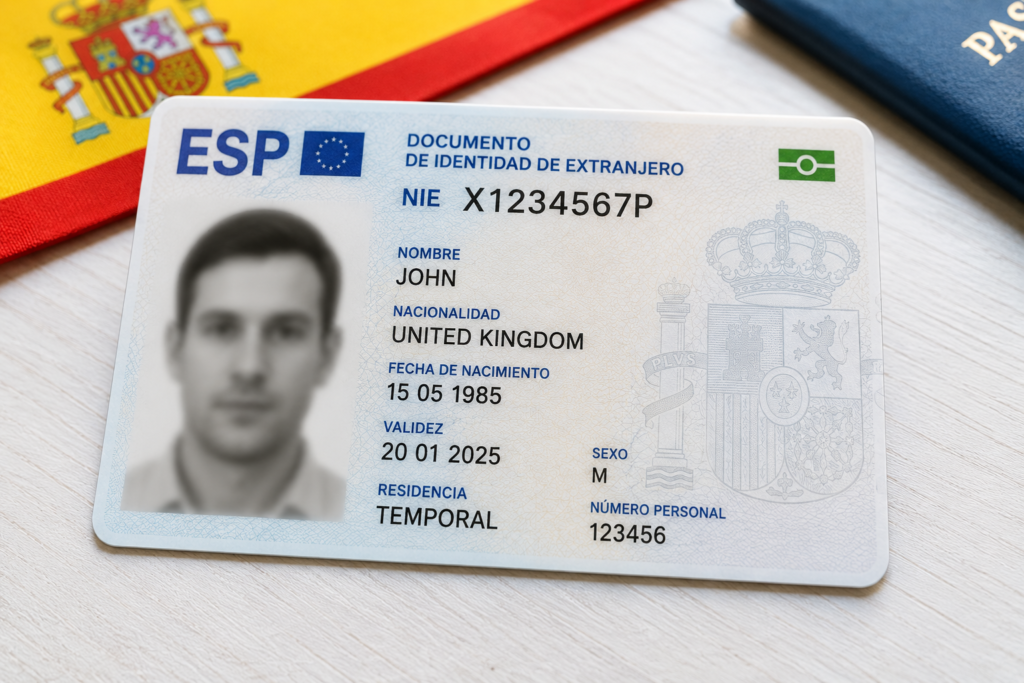
Step 3: Issue Your NIE Number
The NIE is the foreigner identification number used in Spain.
You need it for:
- Buying property
- Paying taxes
- Opening a bank account
- Signing at the notary
- Registering ownership
Your lawyer can often help arrange the NIE, and in many cases this can be done through Power of Attorney.
Step 4: Open a Spanish Bank Account
Most buyers open a Spanish bank account before completion.
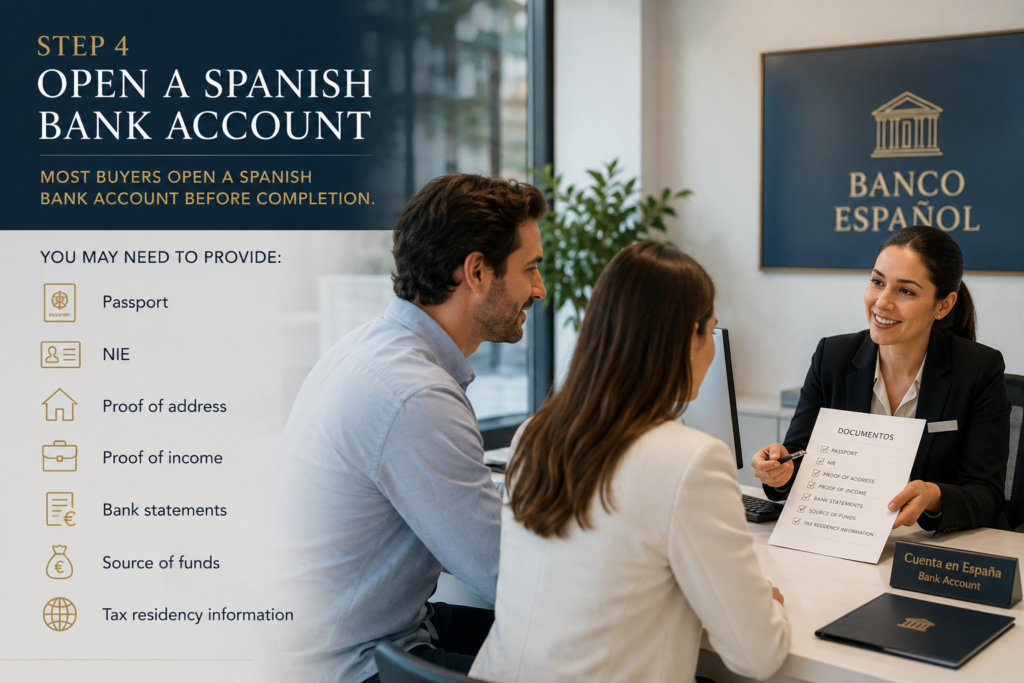
You may need to provide:
- Passport
- NIE
- Proof of address
- Proof of income
- Bank statements
- Source of funds
- Tax residency information
Spanish banks must follow KYC and anti-money laundering rules, so be prepared to explain where the funds come from.
According to SEPBLAC (Spain’s Executive Service for the Prevention of Money Laundering and Monetary Offences), you must demonstrate how the purchase is being financed.
This is normal and should not be left until the last moment.
Step 5: Choose a Lawyer
An independent lawyer is essential.
Experienced firms such as Manzanares Lawyers and other Marbella-based legal companies can support foreign buyers with a full-service package, including NIE, bank account support, legal checks, contracts and notary coordination.
Your lawyer should check:
- Ownership
- Nota Simple
- Existing debts
- Building licences
- Community fees
- Property taxes
- Planning situation
- First Occupation Licence, where applicable
- Tourist licence status, if relevant
For busy buyers and pure investors, a strong lawyer and local buying team can make the process almost fully remote.
Step 6: Reserve the Property
Once you agree terms, the property is usually reserved.
A typical reservation deposit may range from:
- €6,000 to €20,000+
- Higher amounts for luxury properties
The reservation agreement normally takes the property off the market for a short period while legal checks begin.
Do not treat the reservation as a formality. The conditions, deadlines and refund terms should be clear before signing.
Step 7: Legal Due Diligence
This is where your lawyer confirms whether the property is safe to buy.
The lawyer normally reviews:
- Land Registry information
- Seller identity and ownership
- Debts or charges
- Community debts
- IBI and rubbish tax
- Licences
- Planning compliance
- Mortgage cancellation, if needed
- Contract conditions
For villas and older beachfront homes, it is also wise to involve an architect or technical surveyor.
Step 8: Sign the Arras Contract
Once the checks are satisfactory, buyers usually sign a private purchase contract, often called the Arras contract.
At this stage, the buyer commonly pays around 10% of the purchase price.
The contract should clearly state:
- Final purchase price
- Completion date
- Items included
- Penalties if either party withdraws
- Mortgage conditions, if agreed
- Property condition
- Legal obligations before completion
This is one of the most important stages in the process.
Step 9: Complete at the Notary
The final purchase is completed before a Spanish notary.
At completion:
- The public deed is signed
- The balance is paid
- Keys are handed over
- Ownership is transferred
- The property is registered in your name
Some buyers attend personally. Others sign through their lawyer using Power of Attorney.
Buying Remotely Is Possible
Many international buyers do not spend weeks in Marbella.
Some buyers:
- Visit once to choose the property
- Come only for the notary signing
- Complete fully remotely
- Buy as investors based on numbers and due diligence
For investors, the key is reliable data:
- Purchase price
- Expected rental income
- Running costs
- Community fees
- Taxes
- Maintenance
- Exit potential
A beautiful property is not enough. The numbers must make sense.
Taxes and Costs for Foreign Buyers
Foreign buyers pay the same purchase taxes as local buyers.
In Andalucía, typical purchase costs include:
- Transfer Tax (ITP) for resale properties
- VAT (IVA) for new-build properties
- Stamp Duty (AJD)
- Legal fees
- Notary fees
- Land Registry fees
- Mortgage-related costs, if financing is used
Your lawyer should provide a full cost estimate before you commit.
Is Marbella a Good Place for Foreign Buyers?
Marbella remains one of the strongest international property markets in Spain.
- International schools
- Private healthcare
- Golf courses
- Beach clubs
- Luxury marinas
- Strong rental demand
- Excellent lifestyle
- Year-round international community
If managed correctly, property in Marbella can be a wonderful lifestyle investment, rental asset and long-term wealth position.
Like every investment, it must be checked carefully.
Final Thoughts

Buying a home in Marbella as a foreigner is not complicated when the process is managed properly.
The most important steps are preparation, reliable legal support, clear financial planning and realistic due diligence.
Once the NIE, bank account, KYC checks and funds are organised, the process is very similar to buying as a local resident.
For international buyers, the best approach is to build the right team before making an offer. That usually means a trusted real estate advisor, an experienced lawyer, a mortgage broker if needed and, for higher-value properties, a technical specialist or architect.
With the right structure, buying in Marbella can be secure, efficient and highly rewarding.